Buying a mountain home in Mi Wuk Village can feel simple until you get to the utilities. One cabin may be on mutual water and septic, while another nearby could be tied to a limited sewer area or use a private well. If you are buying from out of the area, those differences matter more than the listing description might suggest. This guide will help you understand how septic, water, power, and fuel setups can work in Mi Wuk Village so you can ask better questions before closing. Let’s dive in.
Why Mi Wuk utilities are parcel-specific
In Mi Wuk Village, utilities are not one-size-fits-all. Official records show a patchwork system where water, wastewater, and other services can vary from one parcel to the next.
That means you should not assume a home has the same setup as the property next door. For buyers, especially second-home buyers, the safest move is to verify each system at the parcel level during due diligence.
Water service in Mi Wuk Village
Mutual water may serve some homes
Mi Wuk Village Mutual Water Company is an active public water system in Tuolumne County. State drinking water records show it has 746 residential connections and 19 commercial connections.
Its listed sources include the Main Tuolumne Ditch intake plus Wells 01, 02, and 03. The 2023 consumer confidence report says the system uses groundwater from three hard-rock wells in fall, winter, and spring, and a surface-water source from the Main Tuolumne Canal in summer.
Private wells may serve other parcels
Some properties may rely on private wells instead of mutual water service. In Tuolumne County, Environmental Health oversees the siting, design, construction, and water-quality testing of new drinking-water wells.
County ordinance 13.16 says drilling, reconstructing, modifying, sealing, deepening, reperforating, destroying, or abandoning a well requires a county permit. If a home has a private well, you will want to verify the permit history and current condition before you close.
Water questions to ask before closing
If the home is on a private well, ask for:
- Well permit records
- Well age and depth
- Recent water-test results
- Service history for any treatment equipment
If the home is on the mutual system, ask for:
- The most recent consumer confidence report
- Any known service, storage, pressure, or backup-source issues
- Confirmation that the parcel is actually connected
Sewer and septic in Mi Wuk Village
Sewer service is limited
TUD’s Mi Wuk Sewer System does not serve all of Mi Wuk Village. According to the district, it serves the majority of commercial properties along State Highway 108 in the Mi Wuk area and a limited residential area nearby.
That is an important detail for buyers. If a listing mentions sewer, you should still confirm whether the specific property is actually connected to the TUD system.
Many homes rely on onsite septic
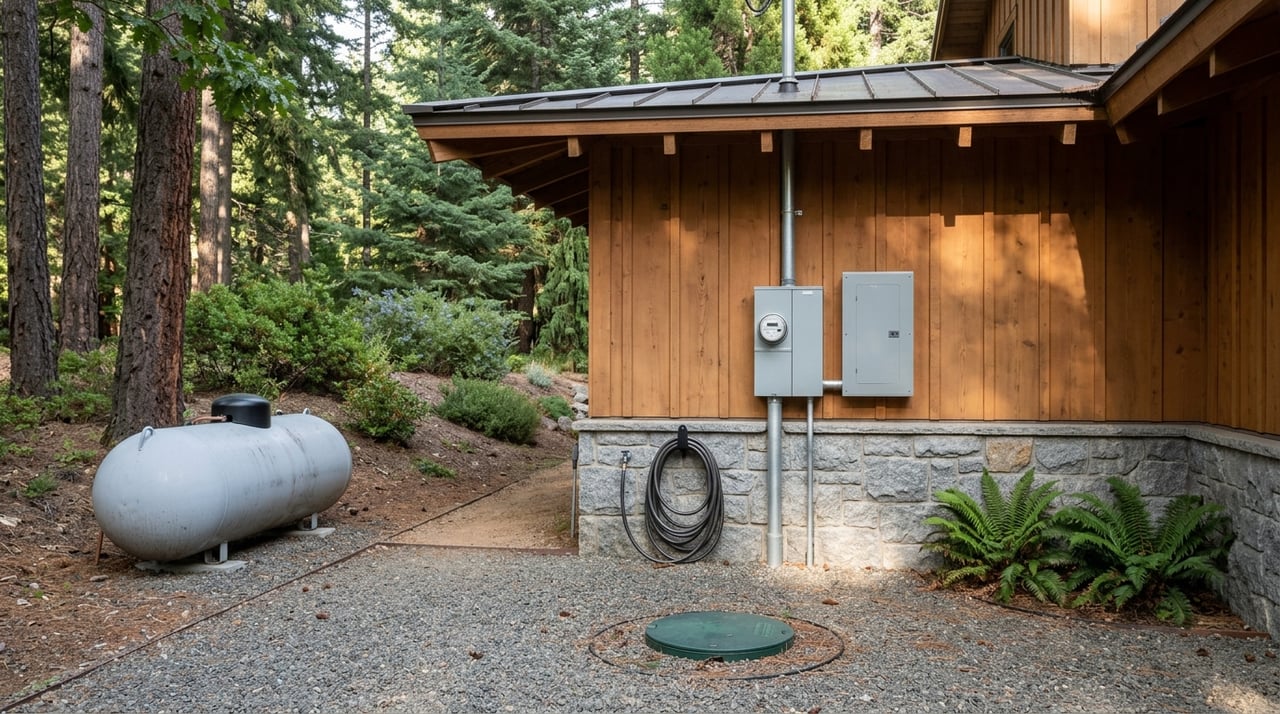
Outside that limited sewer pocket, many homes may rely on private septic systems. In Tuolumne County, Environmental Health oversees the siting, design, construction, and maintenance of onsite wastewater systems.
For new construction, the county describes a two-step process that starts with a site and soils evaluation and ends with an onsite wastewater construction permit. The county also requires site evaluations for system repairs.
Septic design depends on the site
A county site evaluation helps determine whether a parcel can support a standard gravity system or whether a special design system is needed. Common constraints that can trigger a special design include shallow groundwater, shallow hardpan, and excessive slopes.
This matters in mountain areas because terrain and soil conditions can directly affect what is possible on a parcel. If you are buying a home with septic, the system type is not just a technical detail. It can affect maintenance, repair complexity, and future planning.
Key septic rules buyers should know
Tuolumne County publishes setback standards that are useful during due diligence. For example, the county table shows minimum horizontal setbacks of 50 feet from a private water well to a septic tank and 100 feet from a private water well to a disposal field.
Those numbers are important if a property has both a private well and an onsite septic system. They can also matter if you are thinking about additions, future improvements, or rebuilding.
Septic maintenance basics
The county says the septic system is the homeowner’s responsibility. Its homeowner guide recommends inspecting the system about every 3 years and pumping the tank generally every 3 to 5 years, depending on household size, water use, and tank capacity.
Some systems need more attention than others. The county notes that alternative systems may have pumps, float switches, or other electrical or mechanical components and may need more frequent inspection.
Questions to ask about a septic property
If a Mi Wuk Village home uses septic, these are smart questions to ask:
- Is the system standard gravity or special design?
- Where are the tank, drainfield, and reserve area shown on the as-built drawing?
- When was the tank last pumped?
- Are county permits and final approvals on file?
- Have there been any repairs, upgrades, or known issues?
These questions can help you understand both the current condition and the long-term ownership picture. They are especially useful when buying a second home or vacation property from a distance.
What to ask if a home is on TUD sewer
If a property is connected to TUD sewer, that does not mean every part of the system is the district’s responsibility. TUD says the homeowner is responsible for private sewer facilities on the property.
The district’s smoke-testing guidance explains that smoke can reveal faulty connections or cracks in private plumbing. As part of your due diligence, ask whether there have been any private lateral issues, repairs, or testing results to review.
Propane and electric setups matter too
PG&E serves Mi Wuk Village
PG&E serves the Mi-Wuk Village electric territory in Tuolumne County. Buyers can start or stop residential electric service through PG&E’s service-request process.
For a rural property, though, the bigger question is often how the home’s essential systems depend on electricity. A well pump, pressure system, septic pump, or generator connection can all shape how a property functions day to day.
Propane is common in rural homes
Propane is often part of the picture in rural homes. It is commonly used for space heating, water heating, cooking, clothes drying, gas fireplaces, barbecue grills, and backup generators.
In practical terms, that means a Mi Wuk Village home may use a mix of power sources rather than relying on one utility. Understanding that mix can help you avoid surprises after move-in.
Questions to ask about propane and power
Ask these questions when touring a rural home:
- What appliances run on propane?
- Is the water heater propane, electric, or both?
- Is the furnace propane or electric?
- Does the property have backup power for key systems?
- Are the well pump, pressure tank, septic pump, or generator tied into the electrical system properly?
- How often is the propane tank filled or serviced?
These details matter because rural comfort systems often depend on multiple components working together.
Why system verification matters in Mi Wuk
A mountain property can be beautiful and still need careful utility review. In Mi Wuk Village, the same neighborhood name can include homes on mutual water, private wells, limited sewer service, septic systems, propane, or some combination of them.
That is why buyer due diligence should go beyond the listing notes. Confirming permits, service type, and maintenance history in writing can help you understand the property you are actually buying.
A practical buyer checklist
Before closing on a home in Mi Wuk Village, try to confirm the following:
- Actual water source for the parcel
- Whether the home is on TUD sewer or private septic
- Septic as-built records, permits, and pumping history if applicable
- Well permit and water-test records if applicable
- Propane appliances and tank-service details
- Electrical support for pumps, pressure systems, and backup power
- Any known repairs or inspection findings for private utility components
In Tuolumne County, the county is the right place to verify septic and well permits. Licensed plumbers, septic professionals, well contractors, and electricians can help inspect the technical side of the property.
Why local guidance helps
In mountain markets, utility questions are not side issues. They are part of understanding value, risk, maintenance, and how a home will actually live over time.
That is especially true if you are buying from the Bay Area, Southern California, or anywhere else outside the county. Having a local, construction-literate real estate guide can make it much easier to spot the right questions early and keep your due diligence focused.
If you are considering a cabin, second home, or rural property in Mi Wuk Village, Yana Vass can help you evaluate the real-world details behind the listing so you can move forward with confidence.
FAQs
What kind of water service do homes in Mi Wuk Village have?
- Homes in Mi Wuk Village may be served by Mi Wuk Village Mutual Water Company or by a private well, depending on the parcel.
Does all of Mi Wuk Village have public sewer service?
- No. TUD says its Mi Wuk Sewer System serves the majority of commercial properties along Highway 108 in the area and a limited nearby residential area.
Who regulates septic systems in Mi Wuk Village?
- Tuolumne County Environmental Health oversees the siting, design, construction, and maintenance of onsite wastewater systems.
What septic maintenance should a Tuolumne County homeowner expect?
- The county recommends inspecting a septic system about every 3 years and pumping the tank generally every 3 to 5 years, depending on use and tank capacity.
What should a buyer ask about a private well in Mi Wuk Village?
- Ask for the well permit record, age, depth, recent water-test results, and service history for any treatment equipment.
What utility details should a buyer verify before closing on a Mi Wuk Village home?
- Confirm the parcel’s water source, wastewater setup, fuel source, backup power arrangements, and any relevant permits, inspections, or maintenance records.